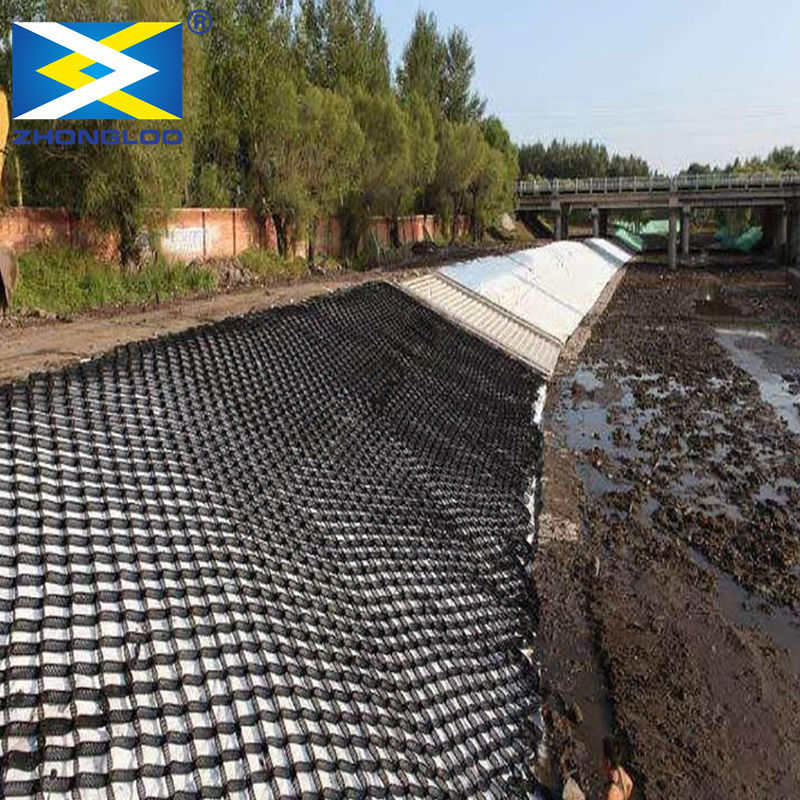
Heavy-Duty HDPE Geocell Driveway Gravel Grid Plastic Geocell System for Soil Stabilization and Retaining Wall Reinforcement
Plastic HDPE geocell is a high-performance three-dimensional cellular confinement system designed for soil stabilization, ground reinforcement and erosion control applications. The structure features a honeycomb-like network formed from high-density polyethylene sheets that are connected together to create flexible yet extremely durable panels.
Each HDPE geocell panel is manufactured using advanced ultrasonic welding technology. This production method creates strong, uniform weld joints that ensure the structural stability and long-term reliability of the entire HDPE geocell system. Because the HDPE geocell panels can be folded into compact bundles, transportation and storage become highly efficient. Once delivered to the construction site, the HDPE geocell can be quickly expanded and installed, greatly improving construction efficiency.
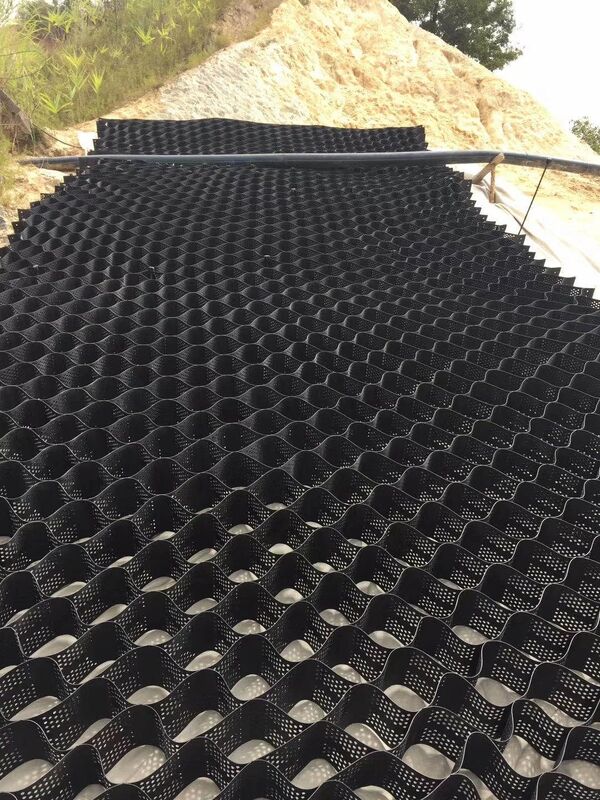
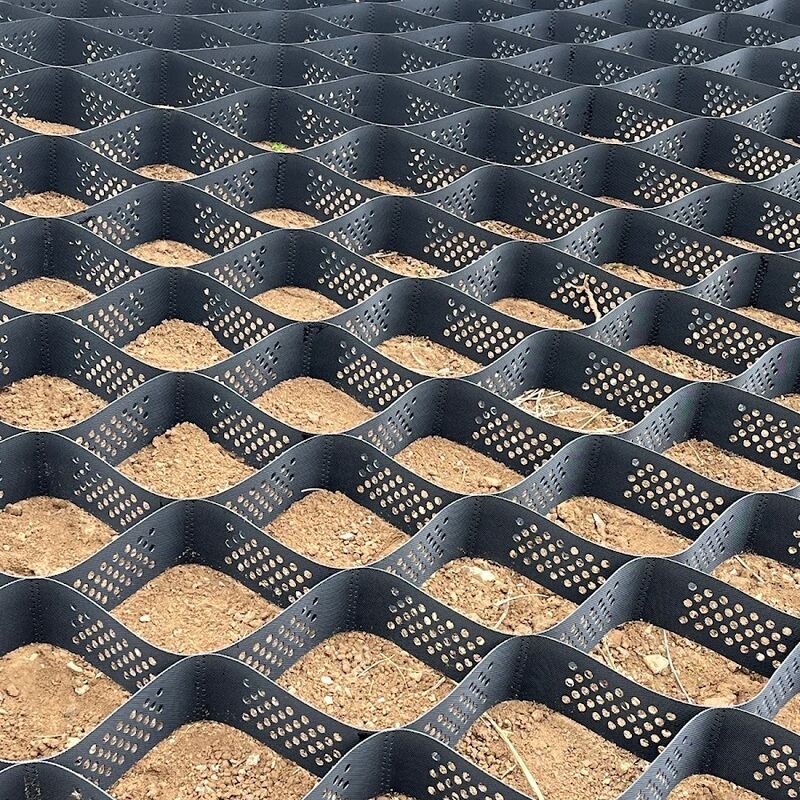
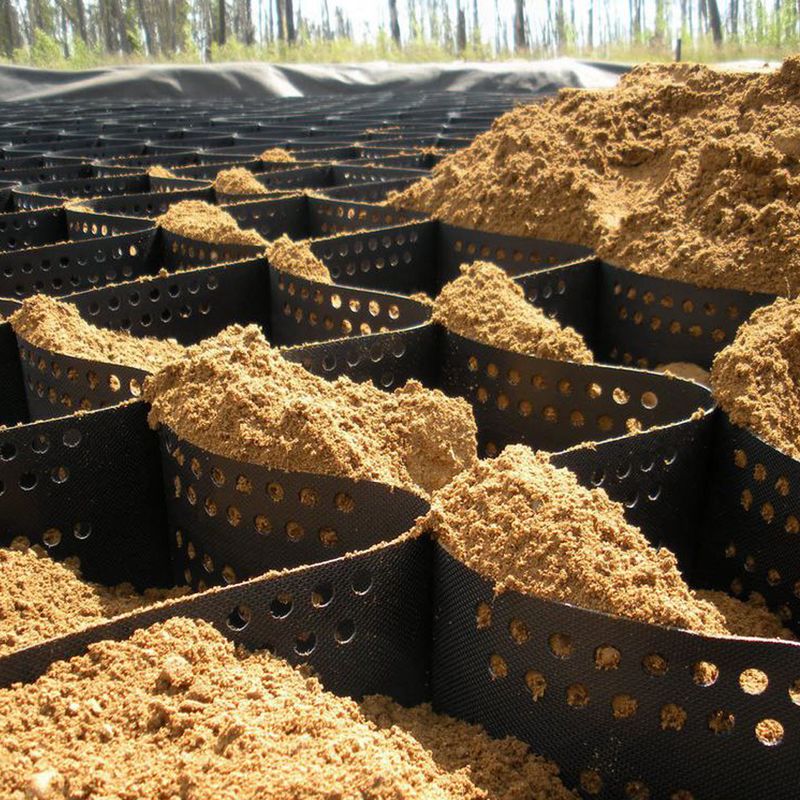
When expanded during installation, the HDPE geocell forms a stable three-dimensional cellular structure that can be filled with a variety of locally available materials such as soil, gravel, crushed stone, sand or concrete. After the cells are filled and properly compacted, the HDPE geocell system creates a strong confinement layer that provides both vertical support and lateral restraint.
This unique confinement mechanism allows the HDPE geocell to effectively distribute loads across a wider surface area, minimizing soil displacement and reducing the risk of ground deformation. As a result, the HDPE geocell system significantly improves the load-bearing capacity and stability of the foundation while reducing the need for excessive base materials.
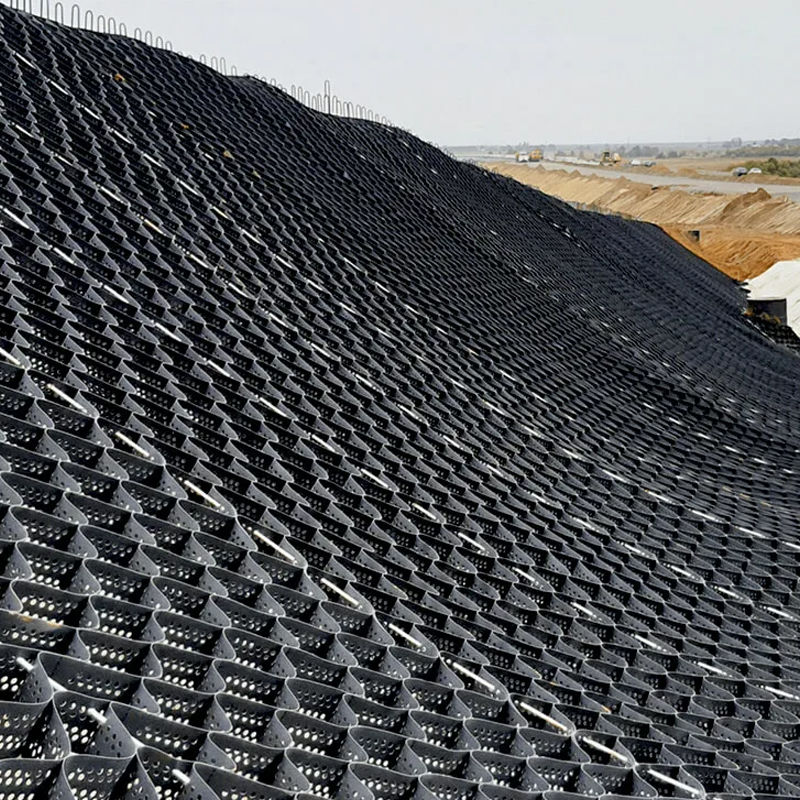
Due to its excellent strength, flexibility and durability, the HDPE geocell system is widely used in applications such as driveway reinforcement, road base stabilization, slope protection, erosion control, retaining wall support, parking areas, railway subgrade construction and infrastructure development projects. The HDPE geocell solution provides a cost-effective and environmentally friendly alternative for modern civil engineering and ground stabilization projects.

As an advanced paving and gravel stabilization solution, HDPE geocell demonstrates excellent mechanical strength as well as outstanding physical and chemical properties. The lightweight structure of HDPE geocell provides strong resistance to abrasion, aging, acids, and alkalis, allowing the material to maintain long-term performance even in demanding environmental conditions. Thanks to the chemical stability of HDPE geocell, the system can be widely applied in different soil conditions such as sandy areas, desert regions, slopes, and other complex geological environments without deterioration.
The HDPE geocell system creates powerful lateral confinement that effectively prevents soil deformation, rut formation, and surface displacement. By enhancing the interlocking effect between infill materials, HDPE geocell significantly improves the load-bearing capacity of roadbeds and pavement structures. At the same time, HDPE geocell distributes vertical and dynamic loads more evenly across the surface, reducing stress concentration and improving long-term structural stability. Because of these advantages, HDPE geocell is widely used in driveways, access roads, retaining wall reinforcement, and slope protection projects.
Another important advantage of HDPE geocell is its excellent resistance to dynamic loads and erosion. The HDPE geocell structure can withstand repeated traffic pressure and the impact of flowing water without losing stability. In addition, the geometric configuration of HDPE geocell, including cell height, sheet thickness, and welding spacing, can be customized according to project requirements. This flexibility allows HDPE geocell systems to adapt to various engineering designs and construction environments.
From a construction perspective, HDPE geocell is designed with retractable panels that can be folded into compact packages for convenient transportation and storage. The reduced packing volume makes HDPE geocell easier to deliver to project sites. During installation, the HDPE geocell panels can be quickly expanded and connected, significantly improving construction efficiency. In many projects, locally available materials such as gravel, soil, or sand can be used as infill for the HDPE geocell, reducing transportation costs and overall project expenses. After installation or project completion, the foldable nature of HDPE geocell also simplifies handling and relocation.
In transportation infrastructure projects, HDPE geocell plays an important role in improving subgrade stability and long-term performance. When installed beneath railway tracks, service roads, or maintenance paths, the HDPE geocell system effectively distributes dynamic loads generated by moving vehicles and trains. This helps minimize differential settlement and improves the durability and safety of transportation infrastructure.
For desert highway construction, HDPE geocell provides an effective method for stabilizing loose sand and weak soil foundations. The three-dimensional confinement created by HDPE geocell prevents sand displacement and limits wind erosion, while significantly increasing the bearing capacity of the road base. As a result, HDPE geocell has become a widely used solution for desert roads and transportation routes exposed to shifting sands.
In hydraulic engineering applications, HDPE geocell is often used for stabilizing shallow water channels and protecting channel slopes. When installed along riverbeds or drainage systems, HDPE geocell enhances resistance to erosion, reduces sediment movement, and improves the stability of water flow. The durability of HDPE geocell ensures reliable performance even under constant exposure to water and hydraulic forces.
For foundation reinforcement projects, HDPE geocell is frequently applied in the construction of retaining walls, embankments, wharves, and levees. The strong confinement provided by HDPE geocell increases soil shear strength and helps reduce lateral earth pressure. By improving soil stability, the HDPE geocell system extends the service life and reliability of critical infrastructure.
Environmental protection and ecological restoration projects also make extensive use of HDPE geocell technology. HDPE geocell is widely applied in desert control, coastal protection, and riverbank stabilization projects. In these applications, HDPE geocell helps prevent soil erosion, supports vegetation growth, and promotes sustainable land management. With its durability, adaptability, and environmental benefits, HDPE geocell has become a reliable solution for challenging natural environments and modern infrastructure development.

 Your message must be between 20-3,000 characters!